5 Technologies That Will Transform Construction Sites by 2030
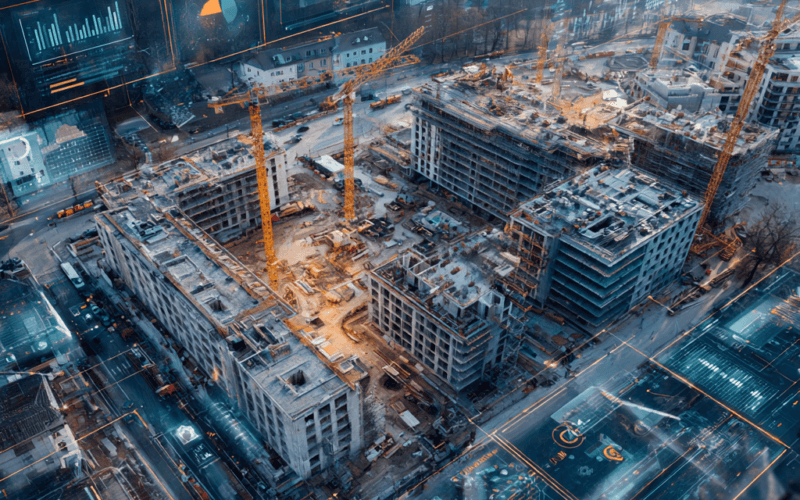
The construction site of 2030 will not be defined by a single breakthrough technology. It will be shaped by the convergence of data, automation, industrialised construction, artificial intelligence and real-time project controls.
This transformation is already underway because the construction industry faces a structural productivity challenge. McKinsey has repeatedly shown that construction productivity has lagged behind other sectors for decades, while its 2024 analysis highlights that low productivity has made construction 1–3% more expensive each year globally on top of general inflation. In Europe, construction costs rose 36% between 2015 and 2023, according to McKinsey’s analysis drawing on Eurostat data.
For developers, investors and lenders, this means technology is no longer a secondary topic. It is becoming a delivery-risk issue.
By 2030, the construction sites that perform better will be those where technology is integrated into project governance, cost control, planning, procurement, design coordination and site execution. The real question is no longer whether technology will enter construction. The question is which technologies will create measurable value.
1. Artificial intelligence for planning, risk and decision support
Artificial intelligence will become one of the most important tools for project management in construction. Its value will not come primarily from replacing people on site. Its value will come from improving the quality, speed and reliability of decisions.
AI can support schedule analysis, risk forecasting, cost trend detection, procurement planning, document review, progress monitoring and early warning systems. It can analyse historical project data, detect patterns, identify likely delays and flag inconsistencies across documentation.
This is particularly important because many construction failures are not caused by lack of activity. They are caused by weak signals that are detected too late: unrealistic schedules, delayed approvals, cost drift, repeated RFIs, procurement bottlenecks and unresolved design interfaces.
McKinsey’s work on the “next normal” in construction points to a shift toward more data-driven decision-making, stronger value-chain control and digitalisation of products and processes. AI is the layer that can make this data actionable.
By 2030, AI will increasingly support:
predictive project controls,
risk-based scheduling,
cost-to-complete forecasting,
contract and claims analysis,
design issue detection,
procurement risk monitoring.
For Brisk Group, the relevance is clear. AI will strengthen project governance when it is connected to professional judgement, not used as a substitute for it. The future will belong to teams that combine construction expertise with data-driven project controls.
2. Digital twins and BIM-enabled project control
Digital twins will transform the way construction projects are planned, monitored and operated. A digital twin is more than a 3D model. It is a dynamic digital representation of an asset, connected to data about design, cost, programme, performance and operation.
BIM has already changed design coordination. By 2030, the strongest projects will use BIM and digital twins as control systems across the lifecycle: from concept and design management to procurement, construction sequencing, handover and facility management.
Deloitte’s 2025 engineering and construction outlook notes that the sector is increasingly adopting BIM, digital twins, robotics and automation to improve project management, collaboration and decision-making, while reducing delays and costs.
The value of digital twins sits in integration. They allow teams to connect information that is often fragmented:
design models,
quantities,
cost plans,
construction sequencing,
MEP coordination,
sustainability performance,
asset operation data.
This matters because construction risk often appears between disciplines. A design issue can become a cost issue. A sequencing issue can become a site productivity issue. A procurement issue can become a programme issue.
Digital twins help make those connections visible earlier.
For developers and investors, this means better transparency. For project teams, it means fewer blind spots. For cost management services, it means more accurate quantity extraction, scenario testing and value engineering. For planning and project controls, it creates a stronger link between programme logic and physical progress.
By 2030, digital twins will become a standard expectation on complex assets, especially in infrastructure, logistics, airports, healthcare, energy and large mixed-use developments.
3. Robotics, drones and automated site monitoring
Construction sites will become more measurable.
Drones, laser scanning, computer vision, site cameras, autonomous robots and sensor-based monitoring will increasingly capture real-time information about progress, quality, safety and productivity.
The strongest impact will come from reducing the gap between what teams think is happening on site and what is actually happening.
Today, many projects still rely heavily on manual progress updates, fragmented reporting and retrospective documentation. This creates delay between reality and decision-making. Automated site monitoring can close that gap.
By 2030, drones and robotics will support:
progress verification,
site inspections,
quality checks,
safety monitoring,
measurement and surveying,
logistics tracking,
comparison between planned and actual progress.
AI-enabled computer vision will be particularly relevant. It can compare site images with BIM models or schedules and identify where progress is ahead, delayed or inconsistent. This creates a stronger factual base for reporting, payment validation, risk monitoring and contractor coordination.
The change is not only technical. It is managerial. Automated monitoring makes project reporting more objective. It reduces reliance on subjective progress narratives. It helps clients, project managers, construction managers and lenders understand project status with greater confidence.
For Brisk Group, this reinforces the role of independent oversight. Technology can generate better data, but professional project management is needed to interpret that data, prioritise interventions and connect findings to cost, programme and contractual implications.
4. Industrialised construction, modular delivery and prefabrication
By 2030, more construction work will move away from traditional site-based production and toward industrialised delivery models.
This includes modular construction, prefabricated components, standardised assemblies, off-site manufacturing and platform-based design. The logic is clear: factories offer better control over quality, productivity, waste, labour efficiency and sequencing than fragmented on-site production.
McKinsey’s “next normal” research identifies productisation, modularisation and off-site construction as major shifts that can reshape the industry. Its earlier research also highlighted the productivity potential of mass production, standardisation, prefabrication and modularisation in construction.
This matters because construction has historically struggled with bespoke, one-off delivery models. Every project is treated as unique, every site has its own constraints, and every supply chain is reassembled from scratch. That model creates complexity and inefficiency.
Industrialised construction changes the logic.
It allows greater repeatability, better cost predictability, improved quality assurance and shorter on-site duration. It can also reduce weather exposure, site congestion and labour dependency.
The strongest use cases will likely include:
hotels,
residential blocks,
student housing,
healthcare components,
logistics facilities,
data centres,
airport and infrastructure elements.
This does not mean every project will become modular. Many complex developments will remain hybrid. The competitive advantage will come from knowing which parts of a project can be standardised, prefabricated or assembled off site without compromising value, design intent or operational performance.
This is where design management and cost management become critical. Industrialised construction must be planned early. It affects design strategy, procurement, logistics, tolerances, sequencing, contracts and quality control.
By 2030, the question will be less “Can we build it off site?” and more “Which parts of the project should be industrialised to improve predictability?”
5. Connected project controls and real-time construction data
The most important transformation may be the least spectacular: connected project controls.
By 2030, high-performing construction projects will rely less on isolated documents and more on integrated data environments. Cost, schedule, risk, procurement, design changes, RFIs, site progress and reporting will increasingly operate within connected platforms.
This is essential because construction performance depends on interdependence. A delay in design affects procurement. A procurement issue affects the programme. A programme shift affects preliminaries and cost. A cost pressure may require value engineering. A risk decision may require client approval.
If these elements are tracked separately, leadership sees the project too late.
Connected project controls create a single operating picture. They allow project teams to understand not only what happened, but what is likely to happen next.
This is closely aligned with McKinsey’s argument that digital technologies can enable better collaboration, stronger value-chain control and more data-driven decision-making in construction. It is also consistent with Deloitte’s view that technology adoption can improve collaboration, decision-making, productivity, safety and resource allocation in engineering and construction.
For clients, this means better visibility.
For investors, stronger risk monitoring.
For lenders, more reliable development monitoring.
For project teams, faster escalation and clearer accountability.
The future construction site will therefore be connected not only physically, but managerially. The site will become part of a wider data ecosystem linking design, cost, programme, procurement, risk and governance.
This is exactly where professional construction consulting will become more valuable. Technology produces information. Governance turns information into decisions.
What this means for construction leaders
The technologies that will transform construction sites by 2030 are not independent trends. They reinforce one another.
AI needs reliable data.
Digital twins need coordinated design.
Robotics and drones need structured workflows.
Modular construction needs early design and procurement alignment.
Connected project controls need governance.
The companies that benefit most will not be those that buy the most software. They will be those that redesign their delivery model around better information, earlier decisions and stronger integration.
This is where the role of project management in construction will evolve.
Project managers, cost managers, design managers and construction managers will need to operate as integrators of technology, process and governance. Their role will be to ensure that data improves decisions, technology reduces risk and innovation supports delivery outcomes.
How Brisk Group fits into this transformation
At Brisk Group, we see technology as part of a broader delivery discipline.
Our work across project management in construction, construction management services, cost management services, design management, planning and project controls, technical due diligence, development monitoring and risk management is already centred on the principles that technology will amplify: clarity, predictability, cost control, coordination and independent oversight.
By 2030, clients will expect more than reporting. They will expect real-time insight, risk visibility, cost transparency, programme reliability and stronger governance across the full project lifecycle.
Technology will help deliver that. Professional judgement will remain essential.
The construction site of the future will be more digital, more measurable and more connected. The winning projects will still depend on disciplined management, clear accountability and the ability to turn information into timely decisions.
Conclusion
The next wave of construction technology will not eliminate complexity. It will make complexity more visible, measurable and manageable.
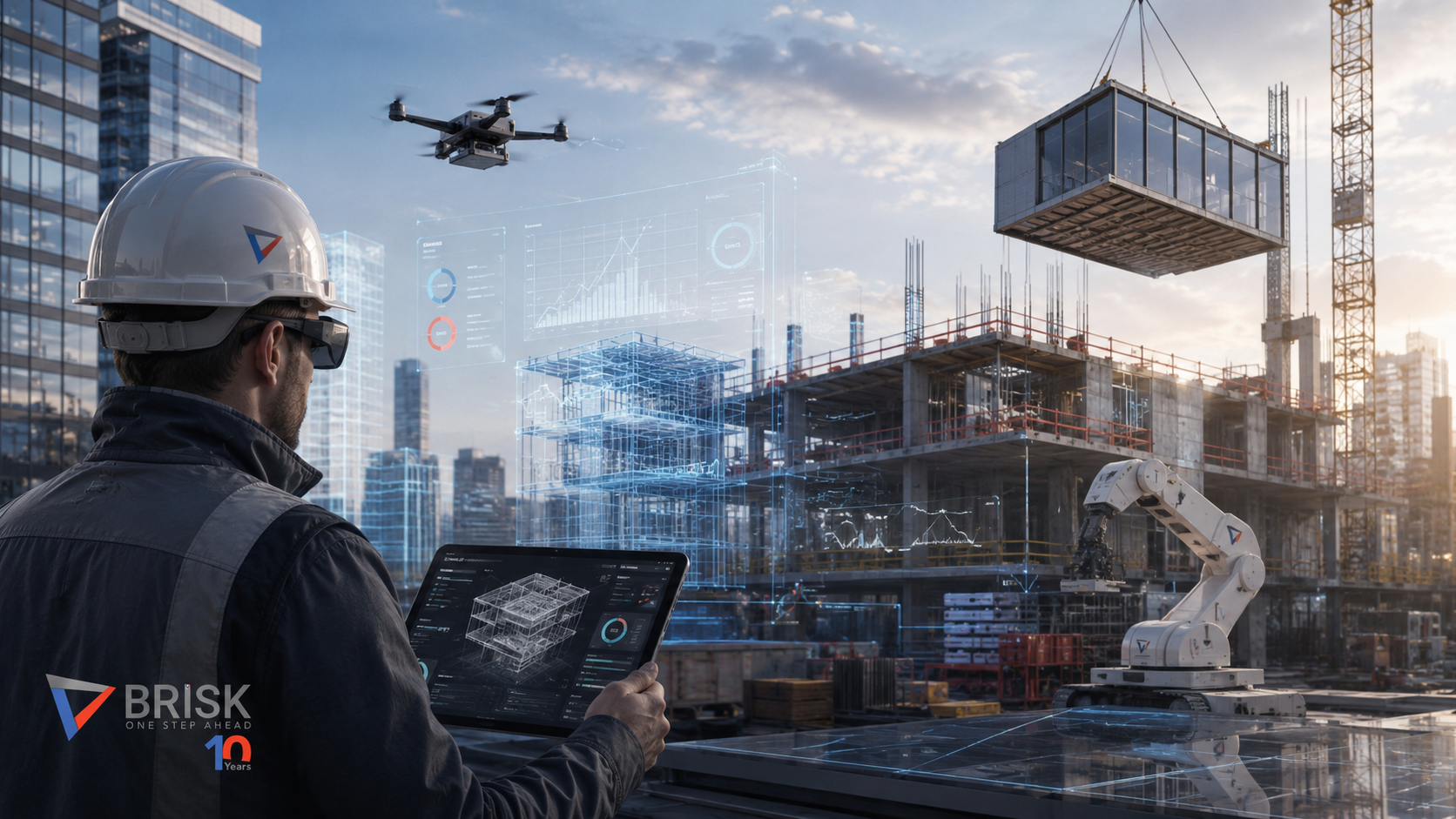
Artificial intelligence, digital twins, robotics, industrialised construction and connected project controls will transform how projects are planned, monitored and delivered.
For developers, investors and lenders, the implication is direct: technology adoption is becoming part of project credibility.
For construction consultants, the challenge is strategic: to integrate these tools into governance, cost control, project controls and delivery assurance.
By 2030, the most advanced construction sites will not simply look more technological. They will perform with greater predictability, transparency and control.