NIBIRU – a new city of entertainment is coming to the Romanian coast
Project Management, Delivery Strategy, and Execution Complexity
Introduction: A New Category of Development in Romania
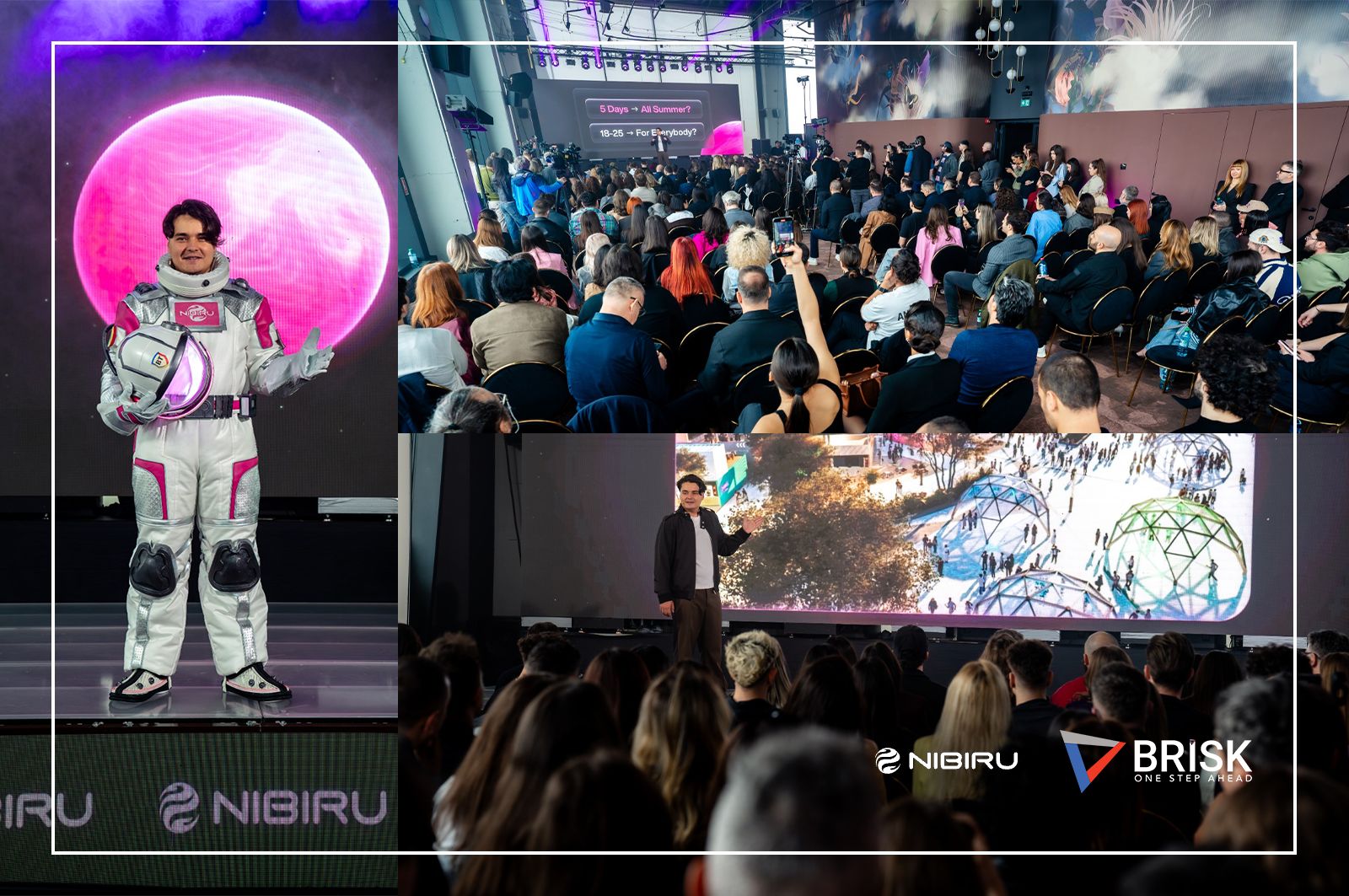
Brisk Group attended the official launch of NIBIRU, one of the most ambitious large-scale entertainment developments currently under delivery in Romania. What is emerging is not a conventional real estate project, but a fully integrated, mixed-use entertainment platform designed to operate daily, at scale.
From a project delivery perspective, NIBIRU reflects a structural shift in how complex destinations are conceived, governed, and executed within the Romanian market.
Project Overview: Scale, Capital, and Delivery Timeline
NIBIRU is defined by scale, capital commitment, and delivery intensity.
The development spans approximately 1.6 million sqm and is supported by more than €50 million in private investment. The targeted completion timeline is July 2026, positioning the project within a compressed delivery window relative to its complexity.
The platform integrates multiple asset classes within a single operational ecosystem, including public space, hospitality, curated retail, and live performance infrastructure. This configuration places NIBIRU at the intersection between urban development and experiential destination design.
Experience Architecture: Beyond Conventional Formats
The project introduces a layered experience model built around immersive environments and thematic urban simulations.
Core components include large-scale stages, curated food and beverage ecosystems, and activation zones structured as a “city within a city.” The concept extends further into simulated civic infrastructure, including a town hall, a police station, and a themed “prison” hosting internationally recognized tattoo artists.
These elements replicate familiar institutional structures, reinterpreted through an entertainment lens. The result is a continuous-use destination, designed for sustained engagement rather than episodic activation.
Delivery Complexity: Where Projects Are Won or Lost
The defining challenge of NIBIRU is not conceptual. It is structural, operational, and execution-driven.
The first layer of complexity lies in assembling a fragmented land footprint into a coherent development platform. This requires alignment across legal, planning, and technical interfaces.
The second layer is the integration of multiple concepts into a single spatial and operational logic. This involves coordinating diverse functions while maintaining clarity in circulation, infrastructure, and user experience.
The third layer is programme compression. Design, approvals, and execution must advance in parallel, increasing the risk of misalignment, rework, and cost escalation.
The fourth layer is the translation of creative ambition into buildable, scalable solutions. This is where many large-scale projects fail—at the interface between vision and execution.
The Role of Project Management: From Coordination to Control
Projects of this scale require a transition from coordination to control.
Project management becomes a governance function that structures decision-making, maintains alignment across stakeholders, and protects the integrity of cost, programme, and scope.
This includes establishing robust project controls, managing risk proactively, ensuring design coordination, and aligning execution with the original development intent.
In the current market context, where financing constraints and execution risks are increasing, this level of control is no longer optional. It is a prerequisite for delivery .
Brisk Group’s Role in NIBIRU
Brisk Group acts as Project Manager for NIBIRU, with a clear mandate to structure complexity and maintain delivery discipline.
The role includes coordinating interfaces, aligning stakeholders, controlling risk exposure, and ensuring that the project remains anchored in its initial vision throughout all stages of delivery.
With a portfolio of over 500 projects and more than 2.5 million sqm of coordinated construction, Brisk operates with a focus on predictability, governance, and execution performance .
Strategic Implications for the Market
NIBIRU signals a broader evolution in the development landscape.
The market is moving away from single-use assets toward integrated destination ecosystems. At the same time, the emphasis is shifting from concept-driven differentiation to execution-driven performance.
In this context, value is increasingly generated through the ability to manage complexity, align capital with delivery, and maintain control across the project lifecycle.
Conclusion
NIBIRU illustrates a fundamental principle of modern development.
Scale creates visibility. Execution creates value.
For developers and investors, the implication is clear. The next generation of projects will be defined not by ambition alone, but by the ability to structure, control, and deliver complexity in a predictable and scalable manner.