How to Compare Tenders for an Industrial Furnace Upgrade

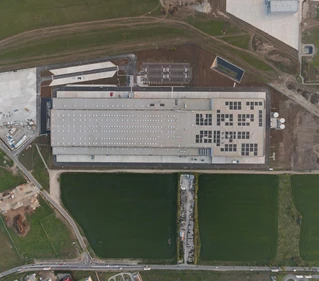
Before comparing two bids for an industrial furnace upgrade, ask each bidder to show where its price stops. At BA Glass in Bucharest, Romania, the modernisation of Furnace Installation No. 4 (BU4) extended from the regenerator to the factory roof. On a project of that breadth, a lower bid can mean the owner is buying less work.
What the BA Glass upgrade involved
The industrial works included repairs to the furnace, the flue gas exhaust chamber and the silos. The scope also covered mechanical ventilation, replacement cladding in high-temperature areas, roof waterproofing and skylights.
Brisk Group supported BA Glass from tender preparation through construction. Before award, we prepared tender documents, helped prequalify contractors, evaluated bids and supported contract negotiations. See the full BA Glass Romania case study.
Where two bids for the same design can differ
Consider a ventilation duct that passes through an existing roof. One mechanical contractor might include temporary weather protection and the work needed to make the roof watertight afterwards. Another might assume the roofing contractor will cover both. Either arrangement can work, provided it matches the roofing contractor’s offer.
Ask each bidder to point to the line in its price that covers the opening and its reinstatement. Then check the roofing package. If both trades have excluded the work, the owner still has to buy it. If both have priced it, agree which contractor will take responsibility before placing the orders.
Three checks before recommending a contractor
- Trace the handover. For each item that crosses between packages, record who supplies it, who installs it and who accepts the finished work. Reference the drawing and the bidder’s written clarification.
- Test the access assumption. Ask plant operations when the area can be released. One eight-hour shift and four two-hour visits provide the same number of hours on paper. The second arrangement may require four separate set-ups.
- Show how you reached the comparable price. Keep each submitted total visible. Alongside it, show the adjustments for exclusions, duplicated work and provisional allowances. The owner can then see how much of the price difference survives once both offers cover the same job.
What the site team needs after award
Carry the agreed responsibilities into the contract packages and the access dates into the construction programme. If an access window moves, the site team can identify the trades affected and give the owner a cost and programme assessment before a change is approved.
At BA Glass, our team coordinated site activities, maintained continuous site supervision and reported progress, risks and scope changes to the client. If you are preparing to tender a plant upgrade, discuss your work packages with Brisk Group.
Frequently asked questions
What is a scope gap in an industrial construction tender?
A scope gap is work the project needs that no contractor has included in its price. To close it before award, define the task, assign it to a package and get written confirmation of the price and any effect on the programme.
How do you compare a fixed price with a provisional sum?
Ask both bidders to price the same defined work where possible. If quantities are still uncertain, use a common allowance for the comparison, keep the original figures visible and agree how the final quantity will be measured and priced.
Who should confirm access windows in an operating factory?
The plant’s operations team should confirm when an area can be released and when it must be available again. Each bidder can then identify the labour, equipment and set-up time its price allows for within that window.
What services did Brisk Group provide for BA Glass in Romania?
For the BU4 modernisation in Bucharest, Brisk Group provided project management, cost management, design coordination and construction management services. The appointment covered tender support and client-side oversight during construction.